Stopping Runoff Before It Damages Your Property
Storm Water Management in Virginia Beach for properties with erosion, standing water, or drainage failures
When heavy rain leaves pools of water in your yard for days or erodes soil away from foundations, the problem extends beyond inconvenience—it threatens structural stability and landscape investment. Dan's Landscaping VB provides storm water management across Virginia Beach, Norfolk, Portsmouth, Cape Charles, Chesapeake, and Smithfield, addressing runoff that undermines hardscapes, floods planting beds, and channels sediment into streets. Properties on sloped lots or those with compacted clay soils typical to the Tidewater region face the most persistent drainage challenges, requiring solutions that redirect water flow before it reaches vulnerable areas.
Storm water management involves analyzing how water moves across your property during rainfall events, identifying where it accumulates or accelerates, then implementing grading improvements, drainage systems, or water management features that control its path and velocity. The approach varies based on site topography, soil composition, existing drainage infrastructure, and proximity to structures—factors that determine whether surface regrading, subsurface collection systems, or retention features will perform most effectively.
Schedule a property evaluation to identify the most effective storm water management approach for your site conditions.
How Grading and Drainage Systems Work Together
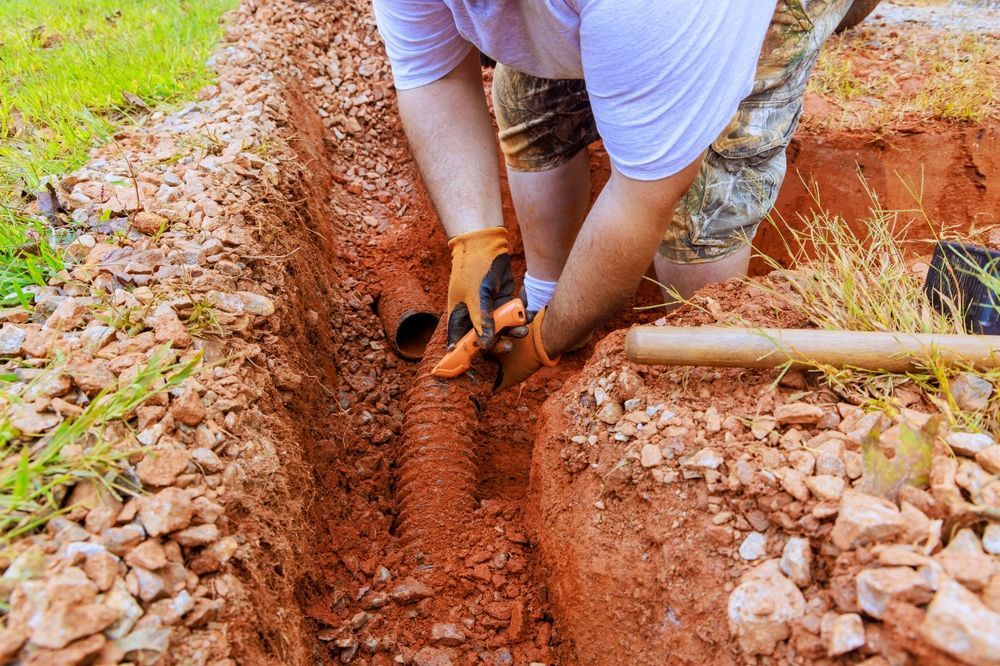
Effective storm water management combines surface shaping with subsurface conveyance to move water away from buildings and high-use areas. Grading adjustments create controlled slopes that direct runoff toward collection points, while drainage systems—whether French drains, channel drains, or dry wells—capture and redirect water before it pools or erodes. The design accounts for soil permeability, rainfall intensity patterns common to coastal Virginia, and the capacity of existing municipal storm systems to accept additional discharge.
After installation, you notice water moving visibly away from foundation walls during storms instead of pooling along edges, previously saturated lawn areas dry within hours rather than days, and erosion channels that once cut through beds or slopes no longer form. The yard remains usable after heavy rain, and sediment stops washing onto driveways or into neighboring properties. Properly executed drainage work prevents the cycle of soil loss, foundation exposure, and landscape damage that untreated runoff produces over time.
Solutions are tailored to whether your property requires primarily surface correction through regrading, subsurface collection through pipe and aggregate systems, or retention features like rain gardens and bioswales that slow and filter runoff before it leaves the site. Properties with severe slope or limited discharge options may need multiple strategies working in sequence to handle storm volumes without overwhelming any single component.
Questions Before Starting Your Project
Understanding how storm water management addresses your property's specific drainage patterns helps clarify what the work involves and what changes you can expect.
What causes water to pool in certain areas of my yard?
Pooling occurs where natural grades direct water toward low spots, where soil compaction prevents infiltration, or where existing drainage systems lack capacity to handle runoff volume. Identifying the cause determines whether regrading, soil amendment, or subsurface collection will resolve the issue.
How does grading differ from installing drainage pipes?
Grading reshapes surface topography to control water direction and velocity, while drainage pipes collect and transport water underground to discharge points. Many properties require both: grading to direct flow toward collection areas and pipes to move captured water away from structures.
When should storm water management be installed in Virginia Beach?
Installation works best during dry periods when soil is workable and grading adjustments can be finalized without interference from standing water. Spring and fall provide optimal conditions, though emergency drainage repairs may proceed year-round when flooding threatens structures.
What happens to the water after it is collected?
Captured runoff is directed to municipal storm drains, discharged to permeable areas at property edges, or held temporarily in retention features that release water gradually. The discharge method depends on local regulations, soil conditions, and available outfall points.
How do I know if my drainage system is working correctly?
Functional drainage systems prevent pooling within 24 hours of rain, eliminate visible erosion channels, and keep water moving away from foundations during storms. If saturation persists or new erosion forms, the system may be undersized, clogged, or improperly graded.
Dan's Landscaping VB evaluates drainage challenges across residential properties in the Tidewater region, developing storm water solutions that protect structures and landscapes from runoff damage. Request an on-site consultation to assess how water currently moves across your property and what adjustments will control it effectively.