
Surfaces That Support Plant Health
Mulching in Virginia Beach for landscape beds requiring moisture retention and weed suppression
Properly applied mulch performs several functions beyond visual improvement: it retains soil moisture during dry periods, moderates soil temperature fluctuations that stress plant roots, and suppresses weed germination that otherwise competes with intentional plantings. Dan's Landscaping provides professional mulch installation across Virginia Beach, addressing landscape beds where inadequate or deteriorated mulch has reduced plant performance and increased maintenance demands. The application process considers bed depth requirements, material selection based on site conditions, and techniques that maximize mulch longevity.
Mulch application involves more than spreading material across beds—proper technique requires maintaining appropriate depth without piling against plant stems or tree trunks, where excess moisture encourages rot and pest problems. The right mulch depth suppresses weeds while allowing water and air to reach soil, typically achieved with two to three inches of material depending on mulch type and existing bed conditions.
Request a consultation to determine mulch options that match your landscape beds and maintenance goals.
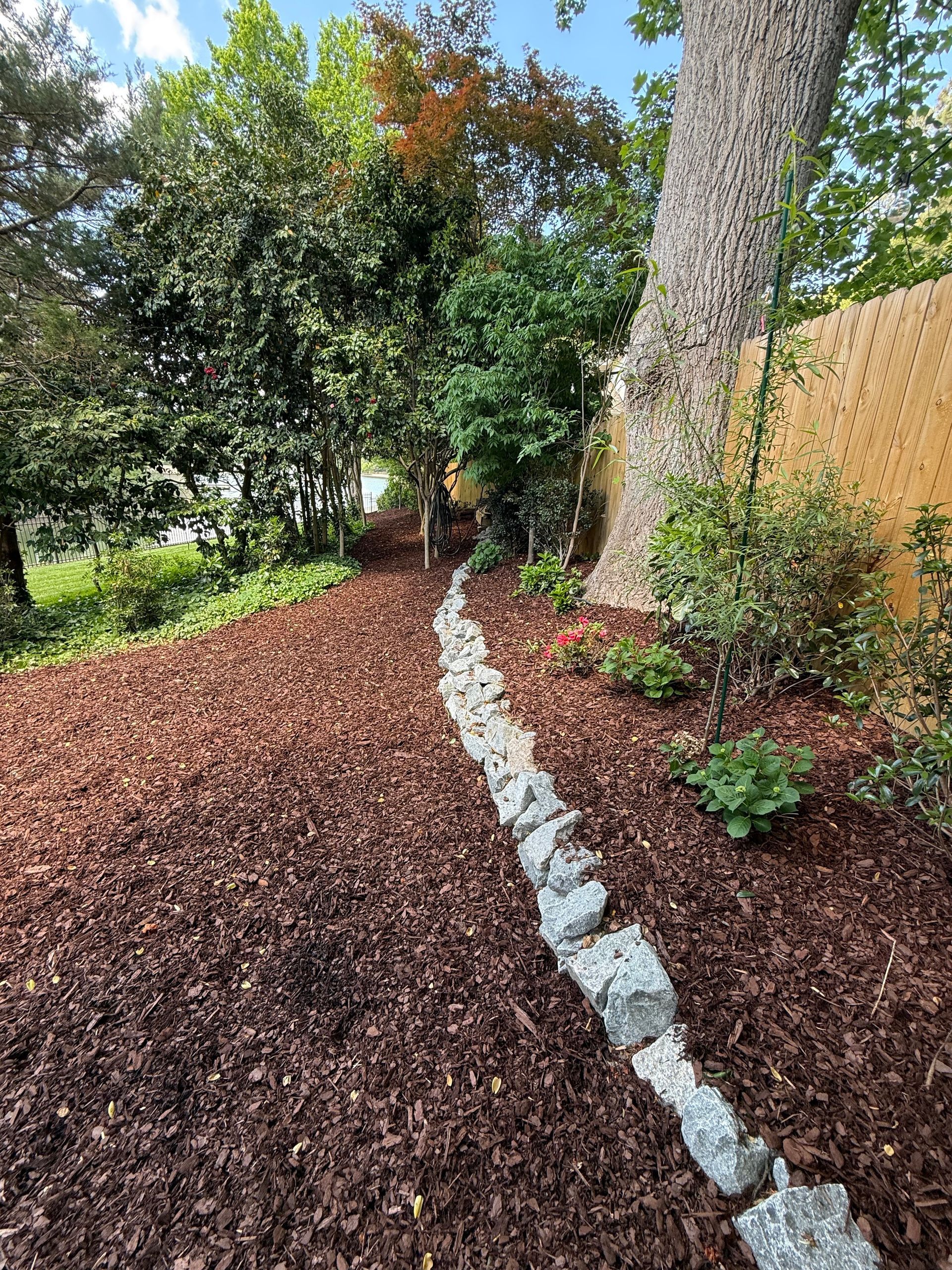
Why Proper Application Techniques Matter
Mulch installation requires attention to depth and placement because improper application creates problems rather than solving them. Material piled too deep prevents water penetration and creates anaerobic conditions that harm plant roots. Mulch placed directly against plant stems or tree bark traps moisture that promotes decay and attracts insects. Proper application maintains consistent depth across beds, keeps material away from direct plant contact, and creates a finished appearance that defines landscape zones clearly.
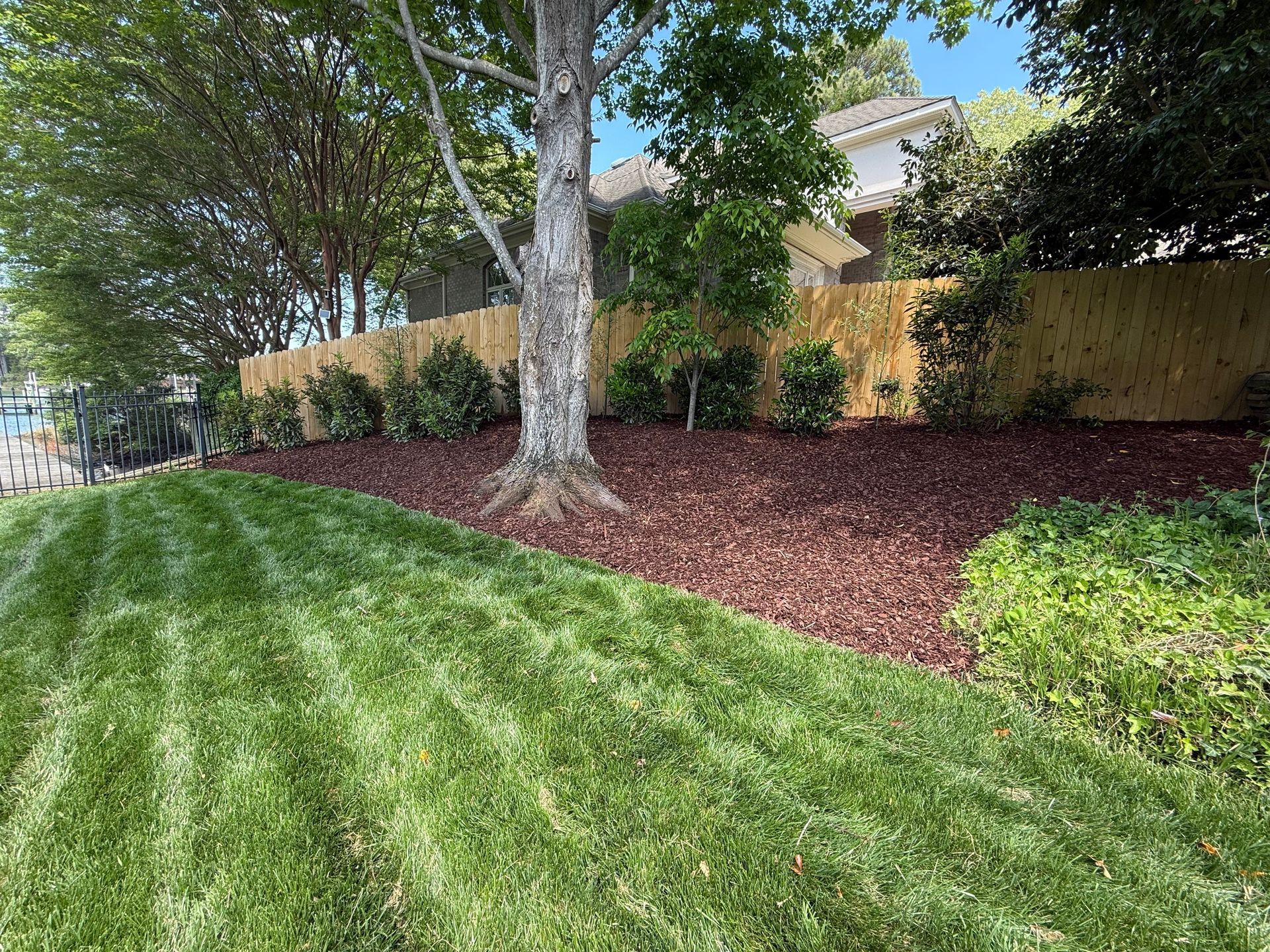
After fresh mulch is installed, landscape beds present a uniform, finished appearance that defines planting areas and complements hardscape features. Over the following months, mulched beds retain soil moisture longer between watering or rainfall, reducing stress on plants during Virginia Beach's hot summer periods. Weed emergence decreases because mulch blocks light needed for germination, cutting the time you spend pulling unwanted growth from beds. Soil temperature stays more stable beneath the mulch layer, protecting roots from rapid temperature swings common during spring and fall transitions.
Mulch application works as part of seasonal maintenance programs, typically scheduled in spring before summer heat arrives or in fall after plant growth slows. The service complements gardens, foundation plantings, and decorative landscape features, though mulch selection may vary based on whether beds contain acid-loving plants, moisture-sensitive species, or high-visibility areas where appearance is the priority.
Answers to Frequent Service Questions
Mulching decisions involve material choices and application timing that affect both appearance and functional performance.
Is mulch application available as a sand-alone service?
Yes. Mulch application is available as a stand-alone service all year.
What colors of mulch are available?
Mulch is available in the following varieties:
Shredded hardwood mulch, dyed brown, and dyed black.
Do you also spread pine straw?
Yes. We will procure bales of pine straw and spread it as an alternative ground cover to mulch.
How does mulch affect soil moisture in sandy coastal soils?
Virginia Beach properties often have sandy soil that drains quickly and dries out faster than loam or clay. A proper mulch layer slows evaporation from the soil surface, keeping moisture available to plant roots longer between rainfall or irrigation cycles.
When should mulch be refreshed or replaced?
Mulch breaks down over time through decomposition and weather exposure, typically requiring replenishment annually or every other year depending on material type and how much has degraded or washed away.
Why keep mulch away from plant stems and tree trunks?
Direct contact traps moisture against bark and stems, creating conditions where rot and boring insects establish. Proper application leaves a small gap around the base of each plant.
How does mulch suppress weed growth in landscape beds?
The mulch layer blocks sunlight from reaching the soil surface, preventing most weed seeds from germinating. Weeds that do emerge have shallow roots in loose mulch and pull out more easily than those rooted directly in soil.
Dan's Landscaping applies mulch using techniques that balance visual appeal with functional benefits suited to your specific landscape beds. Arrange a property visit to review mulch options and schedule seasonal application.