
Drainage That Looks Like Natural Landscape
Dry Creek Installation in Virginia Beach for properties with erosion or runoff moving toward structures
Virginia Beach's sandy soils and seasonal storm patterns create runoff channels that carve through lawns, wash out mulch, and deposit sediment near foundations. Dan's Landscaping installs dry creek beds that direct water movement while appearing as intentional landscape features rather than drainage fixes. These systems combine river rock, graded channels, and strategic placement to manage flow without altering the property's natural appearance.
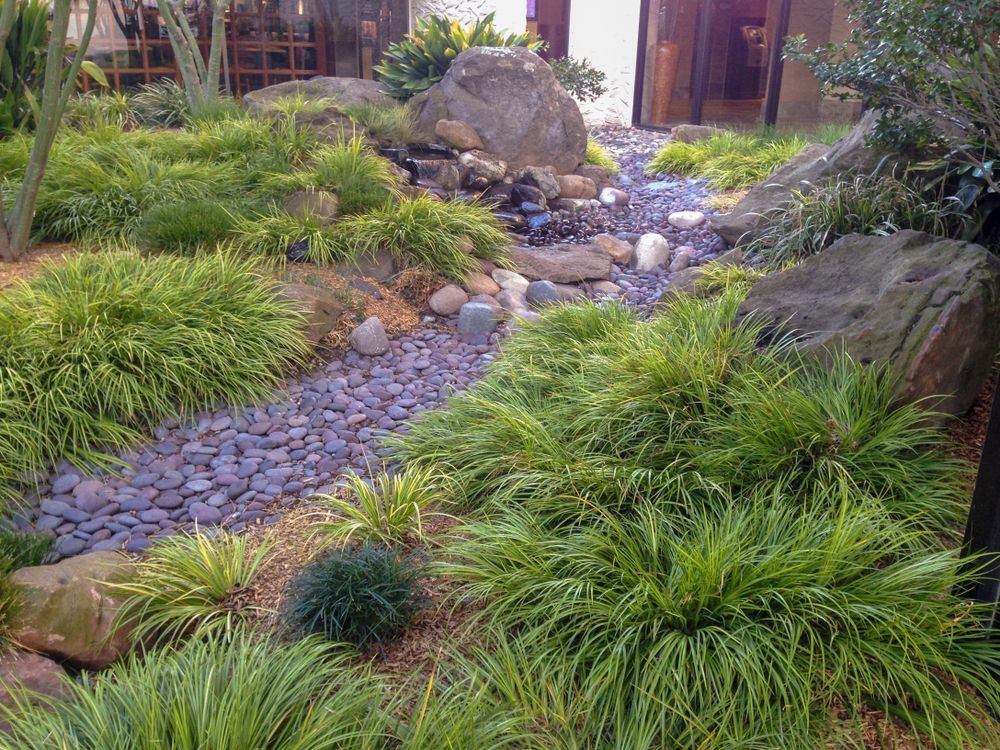
Installation maps where water travels during heavy rain and positions the creek bed to intercept flow before it reaches problem areas. The channel is excavated to follow natural contours, lined with landscape fabric to prevent weed growth, and filled with stone sized to slow water velocity without causing backups. Surrounding plantings soften edges and help the creek blend into garden beds or lawn transitions.
Request a site assessment to identify the placement and design approach that fits your property's drainage patterns.
What Changes After Creek Bed Installation
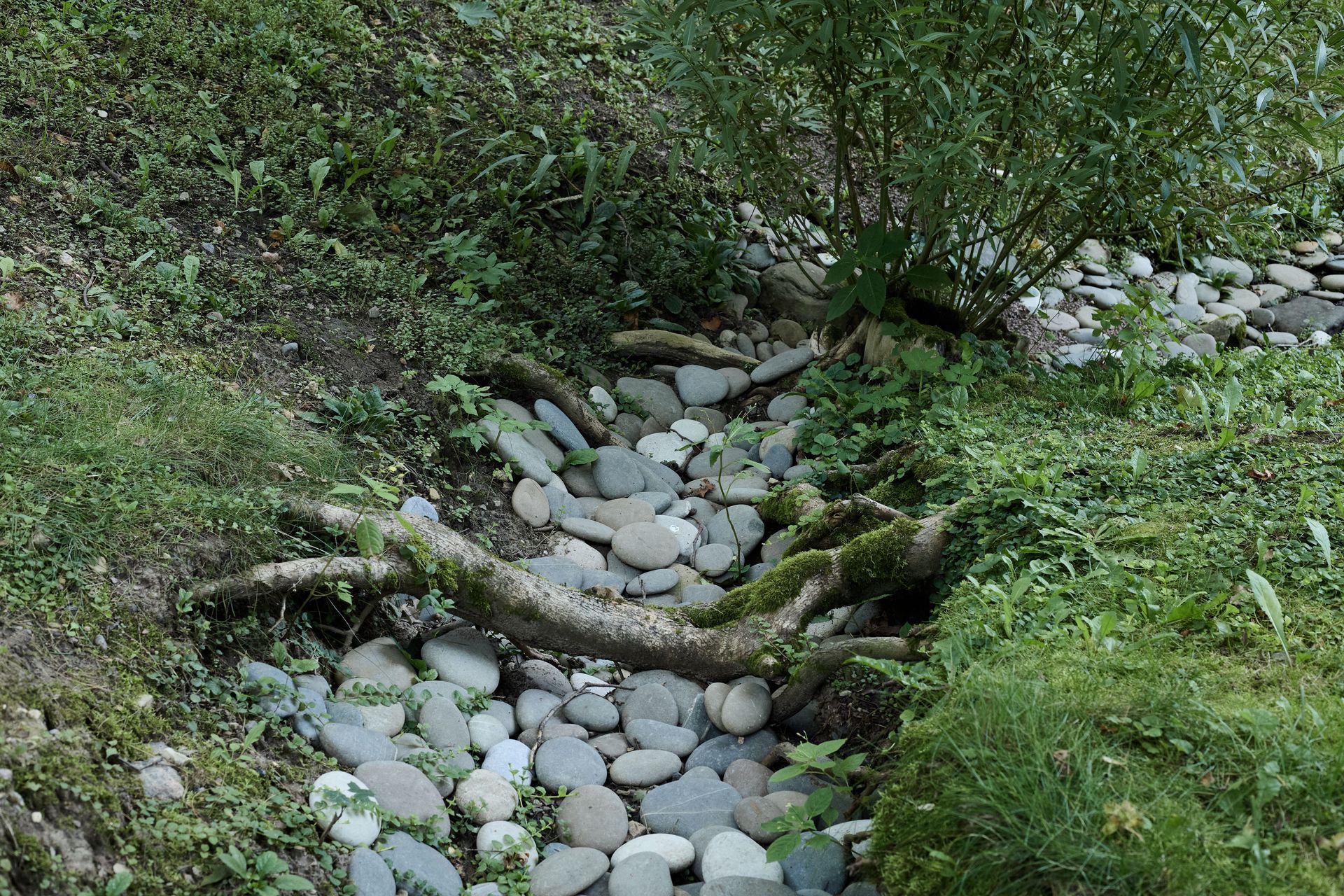
The installation redirects water along a controlled path instead of allowing it to sheet across turf or concentrate in low spots. Creek beds are graded to maintain consistent flow, with larger stones positioned at bends or drop points to dissipate energy and prevent scouring. Smaller gravel fills gaps and creates a textured appearance that mimics natural stream beds.
You notice that runoff no longer carves channels through grass or washes mulch onto driveways. Water moves through the creek bed during storms and leaves the stone clean once drainage subsides, without standing puddles or sediment deposits. The feature adds curb appeal while solving functional problems, and landscaping around the bed creates continuity with existing plantings.
Dry creek installations can connect to downspouts, French drains, or other drainage infrastructure, and the design can be expanded if additional runoff sources develop. Choosing stone color and size affects both appearance and how effectively the system handles peak flow volumes.
Answers to Frequent Drainage Questions
Homeowners often ask how dry creeks differ from other drainage methods and what makes them effective for specific property conditions.
What makes a dry creek bed effective for managing runoff?
The graded channel directs water along a predictable path, and stone layers slow flow velocity to reduce erosion. Unlike French drains, dry creeks remain visible and function as decorative landscape features while still controlling water movement.
How deep does the creek bed need to be?
Depth depends on flow volume and the slope of the property. Most installations in Virginia Beach range from six to twelve inches, with wider channels handling higher volumes and steeper grades requiring deeper excavation to prevent overflow.
Can plantings survive next to a dry creek bed?
Yes, drought-tolerant plants and ornamental grasses thrive along creek edges because they handle both dry periods and occasional saturated soil during storms. Plant selection considers how close roots will be to the drainage path.
What happens if the creek bed clogs with debris?
Periodic removal of leaves and sediment keeps the system functional. Landscape fabric beneath the stone prevents soil intrusion, and proper grading reduces sediment buildup by maintaining flow rather than allowing water to pool.
How does a dry creek integrate with larger drainage projects?
Creek beds can serve as surface outlets for underground French drains or direct water toward rain gardens and bioswales. Dan's Landscaping designs installations that work within comprehensive storm water management plans.
Dan's Landscaping installs dry creek beds in Virginia Beach that manage drainage while enhancing property aesthetics. Schedule a consultation to review runoff patterns and determine the creek design that addresses your specific erosion or water flow concerns.