
Underground Systems That Stop Standing Water
French Drain Installation in Virginia Beach for lawns with soggy spots and drainage concerns near structures
Excess water that doesn't drain creates conditions where turf thins, foundations settle, and landscape investments fail to thrive. A French drain moves subsurface water away from problem areas through a gravel-filled trench containing a perforated pipe that captures and redirects flow. Dan's Landscaping installs these systems in Virginia Beach by mapping property grades and water movement patterns to position drains where they intercept moisture before it reaches structures or saturates planting zones.
Installation begins with trenching along the path where water naturally flows or accumulates. The trench is lined with filter fabric, filled with gravel to allow water entry, and fitted with perforated pipe that carries collected water to a discharge point away from buildings and landscape areas. Depth and slope are calculated to maintain gravity flow without requiring pumps.
Schedule a property evaluation to identify drainage concerns and determine the most effective system layout for your site conditions.
Why Proper Installation Prevents Future Problems
The system works by creating a low-pressure zone where water naturally migrates through soil and into the gravel-filled trench. Perforations in the pipe allow entry while the continuous grade ensures water moves toward the outlet without stagnating. Filter fabric prevents soil particles from clogging gravel voids, which would reduce the system's capacity over time.
Once the drain is operational, you notice that areas that stayed wet for days after rain now dry within hours. Grass grows more uniformly without thin patches caused by root rot, and garden beds no longer flood during heavy storms. The system functions without visible equipment or ongoing adjustments, and turf or plantings can be restored over the trench line once backfilling is complete.
French drains can be combined with surface inlets to capture standing water faster, or connected to dry creek beds for above-ground discharge. System capacity is sized based on soil permeability and rainfall intensity typical to Virginia Beach, where summer thunderstorms deliver high volumes in short periods.
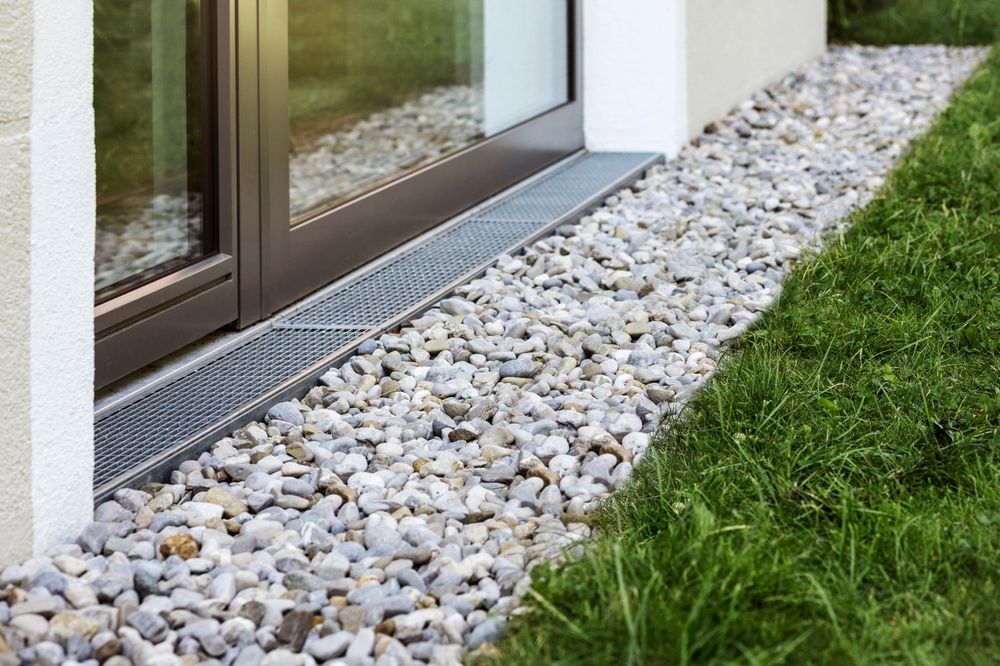
What Property Owners Usually Ask
Questions about installation depth, discharge locations, and how French drains differ from other solutions come up frequently during project planning.
How deep are French drains typically installed?
Most systems are trenched between one and two feet deep, depending on the depth of the water table and how far below the surface water accumulates. Deeper installations are necessary when addressing foundation drainage or when soil layers restrict shallow flow.
Where does the collected water go?
Discharge points are selected based on property layout and local grading. Water may be directed to a low area away from structures, into a storm drain system, or toward a rain garden designed to handle controlled volumes.
How does a French drain differ from a dry creek bed?
French drains are underground and move subsurface water, while dry creek beds manage surface runoff. Both can be part of the same drainage plan, with the French drain feeding into the creek bed for final discharge.
What prevents the system from clogging over time?
Filter fabric around the gravel and pipe prevents soil intrusion, and proper slope ensures continuous flow rather than sediment settling. Periodic inspection of outlet points confirms the system remains clear.
Can French drains help with foundation water issues in Virginia Beach?
Yes, drains installed along foundation perimeters intercept water before it saturates soil near basement walls or crawl spaces, reducing hydrostatic pressure and moisture intrusion common in areas with high water tables.
Dan's Landscaping installs French drain systems customized to Virginia Beach property grades and water flow patterns. Arrange an assessment to review drainage concerns and identify the solution that protects your landscape and structures from excess moisture.